
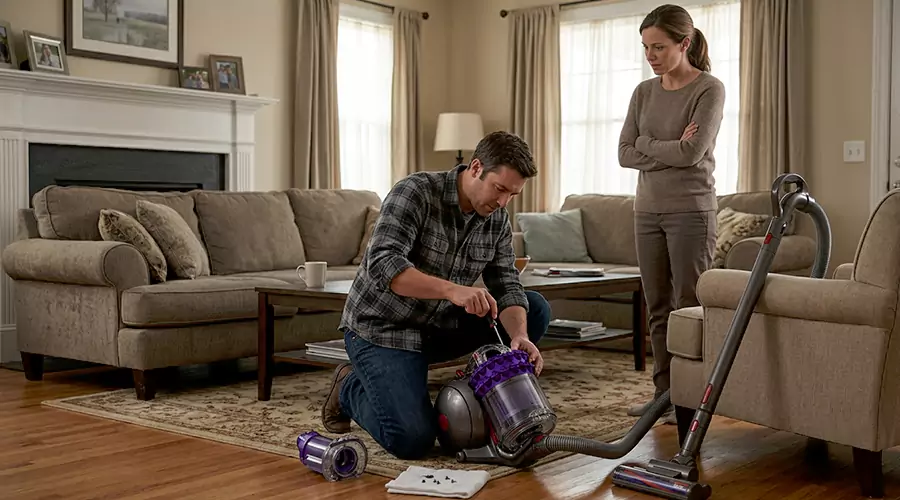
A vacuum often loses suction because air cannot move through the machine. Common causes include a clog, dirty filter, worn belt, or blocked brush roll. Many homeowners look for vacuum cleaner repair steps when the machine loses power or leaves dirt behind. A hot smell or loud noise also means the vacuum needs attention.
Learning how to fix vacuum cleaner problems starts with the simple parts. Check airflow and the brush system before replacing the appliance.
Start With Basic Vacuum Cleaner Troubleshooting
Before opening the machine, unplug it and inspect the outside. Safe vacuum cleaner troubleshooting starts with simple checks that help you avoid unnecessary repairs.
A small blockage can make a strong vacuum act like a weak one.
Quick Checks Before Repair
- Empty the dust bin before testing suction.
- Replace the bag if it feels full or packed.
- Check the hose for trapped hair, paper, or debris.
- Remove tangled strings from the brush roll.
- Let the vacuum cool down if it smells hot.
Common Vacuum Problems and Likely Causes
The table below explains common symptoms and what they usually mean.
| Problem | Likely Cause | What to Check First |
|---|---|---|
| Weak suction | Clogged hose or dirty filter | Hose, filter, dust bin |
| Brush not moving | Broken belt or jammed roller | Belt, brush roll, end caps |
| Vacuum shuts off | Overheating or airflow blockage | Filter, hose, motor vents |
| Loud noise | Loose part or damaged roller | Brush roll, bearings, housing |
| No power | Cord, switch, or motor issue | Outlet, plug, power switch |
| Burning smell | Belt or motor strain | Belt, roller, motor area |
Fix a Vacuum That Has Weak Suction
A vacuum not suctioning often has restricted airflow. Start by checking the dust cup or bag because packed debris blocks air movement. A vacuum suction problem can also come from a clogged hose. Remove the hose and shine a flashlight through it to find trapped debris.
Push a broom handle gently through the hose if the clog sits deep inside. Avoid sharp tools because they can puncture the hose.
Signs of Poor Airflow
- Dirt stays on the carpet after several passes.
- The vacuum sounds louder than usual.
- The hose feels weak when you place your hand near the opening.
- Dust blows back out of the machine.
Clear a Vacuum Hose Clog
A vacuum hose clog can trap pet hair and small objects inside the hose. Disconnect the hose from both ends before cleaning it. Shake the hose and listen for loose debris. Use a flexible cleaning brush when the blockage stays in place. Wash the hose only when the manual allows it. Let the hose dry fully before reconnecting it to the vacuum.
Clean or Replace the Vacuum Filter
Proper vacuum filter cleaning helps restore airflow and protect the motor. A dirty filter forces the machine to work harder during every cleaning cycle. Remove the filter and tap loose dust into a trash can. If it is washable, rinse it with cool water and let it dry completely before reinstalling it.
Replace disposable filters according to the manufacturer’s schedule. A clogged filter can cause weak suction, overheating, and dusty exhaust air.
Repair a Vacuum Brush That Is Not Spinning
A vacuum brush not spinning problem often starts with a jammed roller. If the roller sticks after cleaning, the end caps may need attention. This type of vacuum roller repair can improve carpet cleaning performance.
Brush Roll Repair Tips
- Remove tangled hair before checking the belt.
- Clean dirt around the roller bearings.
- Replace the roller if the bristles look flat or damaged.
- Make sure the brush cover locks back into place.
Replace a Worn Vacuum Belt
A loose or broken belt stops the brush roll from spinning. Vacuum belt replacement is one of the most common repairs for upright models.
Remove the bottom plate and take out the brush roll. Slide the old belt off the motor shaft and replace it with the correct belt size.
Stretch the new belt over the roller and reinstall the brush. Test the vacuum after closing the cover securely.
Check for Vacuum Motor Problems
A vacuum motor problem can cause burning smells and sudden shutoff. Loud humming or grinding also needs quick attention. Stop using the vacuum if you smell smoke. Running the machine can damage the motor further.
Check the filters and hose first. Poor airflow makes the motor work harder. Call for service when the motor still sounds rough after cleaning. Motor testing needs safe handling.
What to Do If the Vacuum Overheats?
A vacuum overheating issue often starts with blocked airflow. Turn the machine off and let it cool for at least 30 minutes. Clean the filter, empty the dust bin, and check the hose before using it again. Many vacuums have a thermal safety switch that resets after cooling. If overheating returns quickly, the motor may be under stress. Continued use can damage internal parts.
Fix a Vacuum That Will Not Turn On
A vacuum not turning on can have a simple cause. Test the outlet with another device before assuming the vacuum has failed.
Inspect the power cord for loose areas near the plug. Do not use the vacuum if the cord looks damaged. Check the power switch and reset button if your model includes one. If the machine still has no power, internal wiring or the motor may need service.
Repair Upright and Canister Vacuums
To repair upright vacuum issues start with the brush roll and belt. Also check the height setting and lower hose. To repair canister vacuum issues start with the hose and wand. Then inspect the filter, bag, and floor head. Both vacuum styles need clean airflow. Correct replacement parts help the machine run longer.
Know Your Vacuum Cleaner Parts
Common vacuum cleaner parts include belts, filters, hoses, brush rolls, bags, switches, motors, and power cords. Knowing these parts helps you find the problem faster. Use your model number when buying replacements. A part that looks similar may not fit correctly.
Simple Vacuum Cleaner Maintenance
Routine vacuum cleaner maintenance can prevent most common failures. Empty the dust bin often and never run the machine with a full bag.
Clean the brush roll after vacuuming homes with pets or long hair. Replace filters and belts before they cause performance problems.
Easy Maintenance Habits
- Check filters once a month.
- Remove hair from the brush roll weekly.
- Inspect the hose when suction drops.
- Replace belts when they look stretched or cracked.
- Store the vacuum in a dry indoor space.
When to Consider Small Appliance Repair?
A broken vacuum cleaner does not always need replacement. A technician can often fix belts, switches, hoses, cords, and suction issues.
Professional small appliance repair may be the right choice for high-end models or newer machines. It can also help when the motor, wiring, or switch needs testing.
Final Vacuum Repair Tips
Use these vacuum repair tips before deciding on service or replacement. Start with the hose, filter, belt, and brush roll. Clean airflow solves many everyday vacuum problems. A vacuum needs open air paths to pick up dirt properly.
Schedule service when the vacuum still runs poorly after basic cleaning. Compare repair cost with replacement cost when the motor or power cord has failed.